With 295.3 million people facing acute hunger and food production required to rise 70% by 2050, the sector is shifting from volume-driven expansion to resilience and precision.Top 10 Agriculture Trends in 2026.
Bioengineering and advanced biofertilizers are strengthening drought and pest resistance while reducing chemical fertilizer use by up to 40%. At the same time, a 2.4 million annual farm labor gap is accelerating robotics adoption, while over 60% of large farms are expected to deploy AI-powered predictive platforms for yield and risk forecasting.Top 10 Agriculture Trends in 2026.
Further, supply chain transparency is rising as one in ten people falls ill from contaminated food. This drives blockchain and IoT traceability solutions. Regenerative agriculture and carbon farming also align climate mitigation with new revenue streams.
From digital twins to indoor farming, agriculture in 2026 is becoming data-driven, automated, and climate-aligned:
Bioengineering
Agricultural Robotics & Automation
Crop Traceability
Regenerative Agriculture
Indoor Farming
Agricultural Mapping
Predictive Agriculture
Carbon Farming
Digital Twins
Advanced Biofertilizers
Read on to explore each trend in depth – uncover key drivers, current market stats, cutting-edge innovations, and agriculture leading innovators shaping the future.
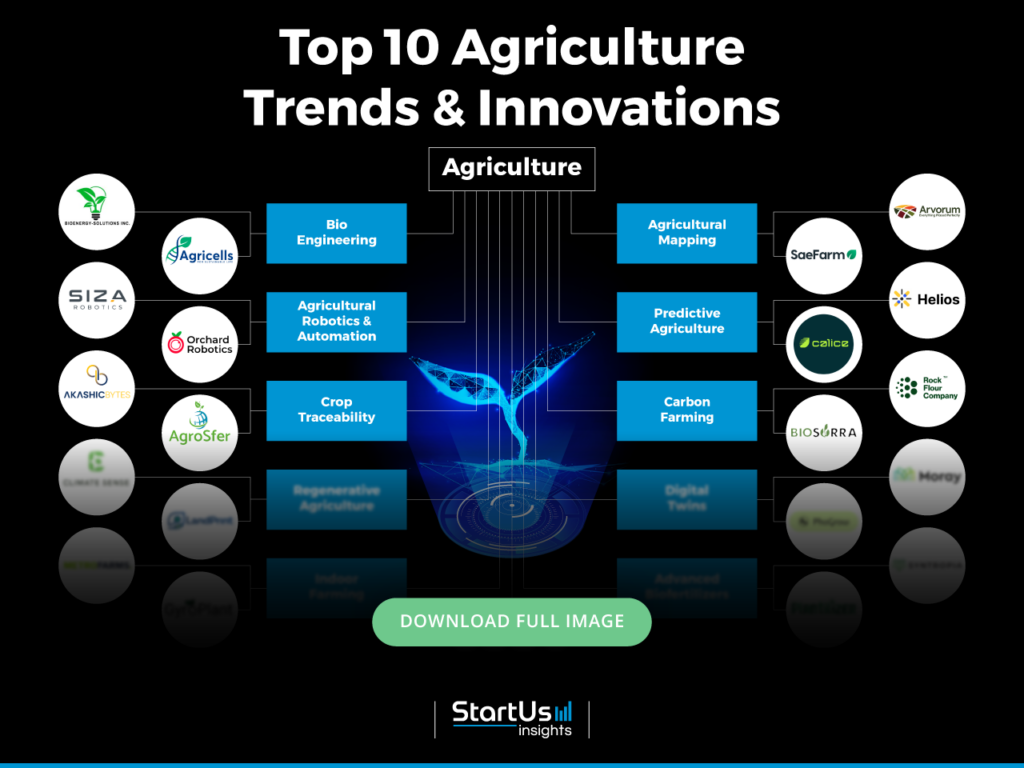
Innovation Map outlines the Top 10 Agriculture Trends & 20 Promising Startups
For this in-depth research on the Top Agriculture Trends & Startups, we analyzed a sample of 8300+ global startups & scaleups. The Agriculture Innovation Map created from this data-driven research helps you improve strategic decision-making by giving you a comprehensive overview of the agriculture industry trends & startups that impact your company.
Tree Map Visualizes the Market Impact of Key Agriculture Innovations
The Tree Map reveals the top trends of 2026 in the agriculture industry. Bioengineering is at the top of the list, proving the progress in fields like genetically edited crops and sustainable agrochemicals. Further, carbon farming and regenerative agriculture are promoting sustainability while addressing the rising food demand.

The use of agricultural robots ensures time and cost efficiency. Lastly, trends like predictive agriculture, agriculture mapping, and precision agriculture give an insight into the unpredictable factors in the agriculture industry. top trends of 2026.
Top 10 Emerging Agriculture Trends [2026 and Beyond]
1. Bio Engineering: 295.3M People in 53 Countries Faced Acute Hunger Last Year
Global agricultural greenhouse gas emissions reached 16.2 billion tonnes of CO2 equivalent in 2022. This represents a 10 percent increase since 2000.
Besides, food insecurity reached alarming levels in the last year, with 295.3 million people across 53 countries facing acute hunger. top trends of 2026.
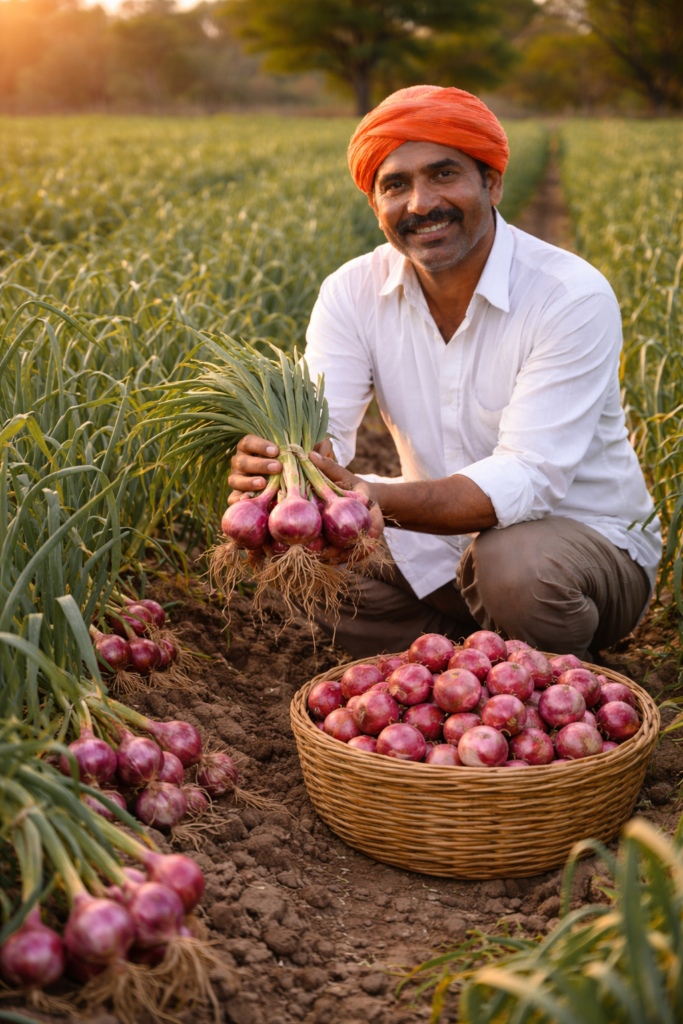
Using bioengineering in different sectors of agriculture addresses multiple challenges like climate change, water scarcity, soil degradation, increasing global food demand, and pest resistance.
Genetic engineering is a rising method of bioengineering that agriculturists use to improve traits like drought resistance, pest resistance, and nutritional content in crops. Further, CRISPR gene editing allows precise modification of plant genomes to modify the traits.
Using CRISPR/Cas9 technology, researchers have developed wheat with reduced gluten content and lower immunoreactivity, potentially making it more tolerable for people with gluten sensitivities. top trends of 2026.
Bioengineering also involves using beneficial microorganisms to produce advanced biofertilizers and soil enhancers. Biofortification is also gaining momentum in areas including rice farming.
An example of beta-carotene fortification is Golden Rice. It contains genes specific to certain metabolic pathways.
These methods lead to good quality crops, an increase in nutrition in the crops, a reduction in the environmental impact of agriculture, water conservation, and more. top trends of 2026.
Bioengineering also produces advanced agricultural compounds, which reduce the reliance on traditional chemical synthesis.
Further, Bayer is partnering with biotech firms, including Ginkgo Bioworks, for nitrogen optimization and carbon sequestration.
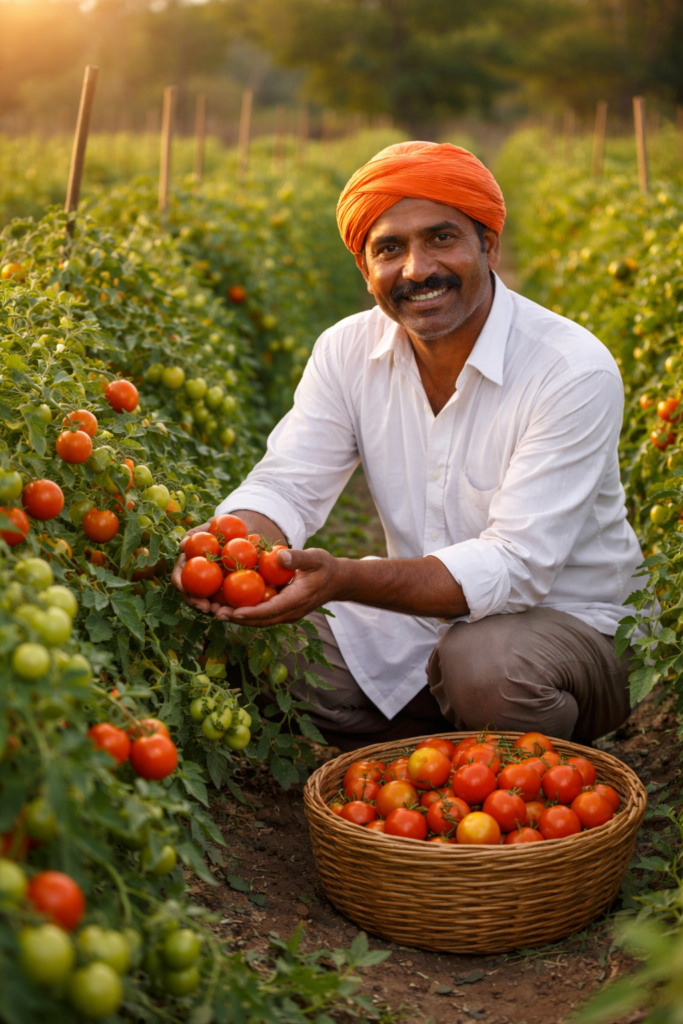
Currently, the agriculture biotechnology market size is set to grow by a compound annual growth rate (CAGR) of 7.1% from 2025 to 2030.
BioEnergy Solutions provides Soil Conditioners & Plant Biostimulants
Canadian startup BioEnergy Solutions manufactures agricultural specialty soil conditioners and plant biostimulant amendment products. The Regenisys increases plant nutritional uptake and improves soil fertility, water retention capacity, and tolerance to environmental stresses.top 10 agriculture trends in 2026
It consists of a high concentration of amino acids, fatty acids, minerals, vitamins, and humates. These are delivered directly to the roots and leaves. The Regenichar improves the microbial population of the soil. It also improves the carbon level and the nutrients in the soil.
The reSET is made from organic wood biomass and is a raw, pyroligneous acid. It brightens the leaf and flower and improves the pigments in the fruit. Additionally, it improves pest and disease resistance. reSET also has applications in adjusting soil pH. The reZONE is a hybrid of all the other products and accelerates soil remediation, reclamation, and soil recovery programs. The startup uses biodegrading processes to develop the products, which also fulfill the soil organic matter requirement and agricultural sustainability.It consists of a high concentration of amino acids, fatty acids, minerals, vitamins, and humates. These are delivered directly to the roots and leaves. The Regenichar improves the microbial population of the soil. It also improves the carbon level and the nutrients in the soil.It consists of a high concentration of amino acids, fatty acids, minerals, vitamins, and humates. These are delivered directly to the roots and leaves. The Regenichar improves the microbial population of the soil. It also improves the carbon level and the nutrients in the soil.
Agricells formulates Biostimulants & BioInsecticides
Belgian startup Agricells develops agrochemicals that decrease dependency on traditional chemical inputs. Its product, the Agricells Growth OD PULV is used for in-furrow or drench applications. It optimizes plant growth and ensures maximum nutrient intake.
The Agricells OD Seed improves germination and speeds up young plant growth, ensuring a healthy and abundant harvest. Agricells also provides Agricells Growth OP01, a Kaolin or Maltodextrin-based solid product, which ensures the efficient release of nutrients and supports plant growth.
The Agricells Growth MG are micro granulates, designed for direct in-furrow applications and fit for releasing essential growth into the soil.
2. Agricultural Robotics & Automation: 2.4M Farm Jobs Needed Annually
The American Farm Bureau Federation estimates 2.4 million farm jobs need to be filled annually.
Robotics and automation in agriculture address labor shortages, improve safety, optimize resource utilization, and assist in making data-driven decisions.
Automated drones, sprinklers, sowing robots, and harvesting robots use technologies like IoT, precision navigation systems, LiDAR, 3D mapping, autonomous vehicle technology, and computer vision. Fertilizing drones and robots also utilize variable rate technology for fertilizer and pesticide application.
Modern autonomous tractors use AI and GPS to improve their navigation system and optimize tasks like plowing, seeding, and fertilizing. These vehicles perform with consistency and precision and free humans of labor-intensive tasks.
For instance, Ecorobotix develops the ARA sprayer, which utilizes AI Plant-by-Plant software with cameras to identify and target individual plants. This allows for the precise application of herbicides. It results in up to 70-95% reduction in chemical inputs.
Robotic harvesting systems for delicate crops like sweet peppers navigate complex environments and handle produce gently, potentially reducing waste and improving yields.
Further, harvesting robots use AI for image processing to assess crop ripeness and quality before plucking them. They function 24×7 to meet high crop demands.Top 10 agriculture trends in 2026
For example, the Digital FarmHand, developed by the University of Sydney, is a robotic platform designed specifically for smallholder farms, capable of mapping fields and collecting data on crop health and yield.
Additionally, there are drones with high-resolution cameras and sensors, which collect real-time data on crop health, soil conditions, pest presence, and more.
The agriculture robots market size is projected to reach USD 139.4 billion by 2035, representing a CAGR of 24.78%.
SIZA Robotics designs Autonomous Agricultural Robots
French startup SIZA Robotics builds Toogo, an autonomous robot for vegetable and large-scale farming. Toogo is equipped with AI-powered, intuitive mission planning and is capable of predictive maintenance and remote supervision of operations.
The robot features powerful electric motors and runs autonomously for multiple hours. It comes with a camera for precise tool guidance and is capable of real-time kinematic (RTK) precision, geofencing, obstacle detection, and emergency stops.
Toogo is modular and has various track widths that adapt to various plots. Additionally, it reduces fuel costs, personnel costs, and CO2 emissions and improves soil compaction.
Table of Contents
Orchard Robotics builds Crop Load Management Robots
US-based startup Orchard Robotics builds a camera system that gathers data on visible fruits on any tree. The camera system uses a custom-built computer vision system and AI software to track the characteristics of every visible fruit on the tree.
It also consists of multiple internal sensors, which make the data available to the users at all times. The camera system is easily mountable on any tractor or farm vehicle. Growers use the camera system to gain strategic insights into crop load management, optimize fruit size and quality, and outperform yield targets.
Farmers and fruit sellers use the system to gather information about early session yield and size estimates, efficient planning and forecasting, and better contract management.
3. Crop Traceability: 1 in 10 People Worldwide Fall Ill from Contaminated Food
According to the WHO, an estimated 600 million people, which is almost 1 in 10 people in the world, fall ill after eating contaminated food, and 420 000 die every year.
Crop traceability systems address increasing regulatory requirements and consumer demand for supply chain transparency.
A few technologies used to ensure crop traceability are geographic information systems (GIS), QR codes, RFID tags, satellite imagery, and remote sensing.
Further, blockchain technology creates an unalterable record of a product’s journey, which ensures fast identification and isolation of contaminated products. This ensures effective recalls, faster decision-making, a reduction in counterfeit products, and the correct pricing of high-quality ones.
In India, blockchain-based traceability solutions combat the issue of spurious seeds, which has been a significant challenge for farmers.
DNA tracing authenticates the origin of agricultural products, allowing for precise identification of crop varieties and their sources. Additionally, farm-to-fork traceability systems reduce food waste by up to 20% in the supply chain, significantly improving resource efficiency.
Additionally, IoT devices monitor the quality, temperature, and storage of crops in transit, which enables precise adherence to food safety standards. An increase in food safety and transparency improves consumer trust.
The global blockchain in agriculture market size will grow at a CAGR of 45.2% to reach USD 8492.59 million by 2032.
Orchard Robotics builds Crop Load Management Robots
US-based startup Orchard Robotics builds a camera system that gathers data on visible fruits on any tree. The camera system uses a custom-built computer vision system and AI software to track the characteristics of every visible fruit on the tree.
It also consists of multiple internal sensors, which make the data available to the users at all times. The camera system is easily mountable on any tractor or farm vehicle. Growers use the camera system to gain strategic insights into crop load management, optimize fruit size and quality, and outperform yield targets.
Akashicbytes advances Agricultural Supply Chain Traceability
Indian startup Akashichbytes builds platforms for agricultural supply chain traceability and farm data management.
Exporters and importers use Tracify for agricultural products. It tracks and manages information about post-harvest activities of crops like grapes and coffee.
The Farm Edge is a farm digitization and data management platform. It is fit for farmer-produce companies, co-operatives, agribusinesses, and government institutions.
The platform ensures transparency in the supply chain by monitoring and collecting data in real time. The platforms ensure safety, ethical sourcing, and sustainability of the products within the supply chain.
AgroSfer simplifies Agricultural Raw Materials Supply Traceability
Beninese startup AgroSfer designs a SaaS platform for the collection and analysis of agricultural supply chain data. The platform creates databases of members of producer organizations. It also manages campaigns and suggests technical routes, trains farmers, along with monitoring their progress.
It facilitates direct trade between cooperatives, lessors, and industrialists. Users collect data like plot yield, field edge loss rate, producer income, carbon impact, and more to generate impact analysis reports.